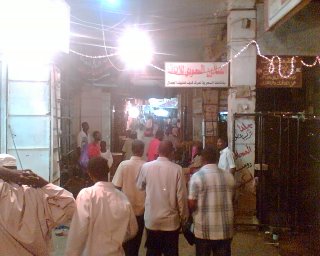
The fuzz, pig, coppers, cops, or just the law, whatever you wanna call the police, I met them in Sudan - twice already.
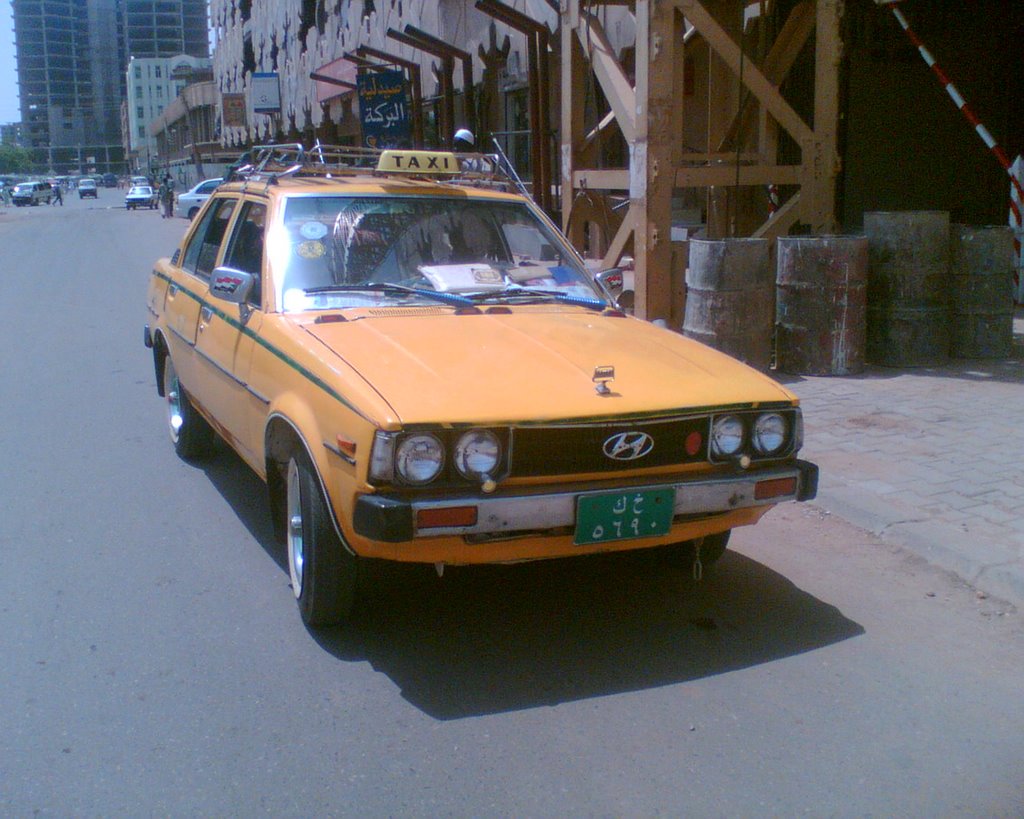
This morning, while driving myself to work, minding my own business, I found myself driving in the middle of a presidential convoy. The president (or vice president, or some big shot of the sorts) was a couple of cars infront of me. As soon as I realized I pulled over to the side of the street, to let the poor guards behind me pass, and do their jobs. Felt a bit bad for them because I'm sure they will get a beating from their commander at why their modified Toyota Land Cruiser couldn't overtake a small hyundai driving along.
Anyway, I pulled over, and they passed. Before I could get in gear and continue my journey, I heard a knock on the window. It was a freightened little traffic policeman, who was trying to act all tough and macho. His partner was rushing to be by his side, from across the street. In his Sudani Arabic, of which I understand about 50% of (goes down to about 10% when they are excited, as was the case with freightened little cop), he was asking me what I was trying to do, and wanted to see my driver's licence. He took my license to his boss, sitting in the police car on the other side of the road, and asked me to see him.
As I approached the police car on the other side of the road, I noticed the boss sitting in the passenger seat with my license in his hands. He wasn't moving. I got all the way to his window, and noticed he was taking a nap. So I did what any good responsible citizen would do. I woke him up! Wished him a kind Ramadan really loud. Upon his coming around, he asked me a series of questions:
Boss: What were you doing?
Me: I was just driving along, and found myself in the middle of the convoy.
Boss: How could you do that?! It's illegal!!
Me: I kinda realize that. I didn't go looking for the convoy and stick myself in the
middle. I was just driving along, and they came up to me.
Boss: Well, didn't you hear the sirens??
Me: No. (I had the music on loud)
Boss: What's this Lebanese license, valid for 32 years??
Me: No, I'm 34 years old. (that's my limited ability to understand their Arabic)
This went on for a bit until I understood his question...
Me: Ooooh, yes, it is valid for 32 years.
Boss: How could that be?! It's too much!
Me: Well, it wasn't really my idea. But you can talk to our Minister of Transportation and get his opinion on it.
Then he looked at me suspiciously, trying to figure out if I was being a smart ass, or if I were genuinely inviting him to write our Minister of Transportation. My face was blank.
Boss: You know they could have shot you in that convoy! They shoot people for things like that!
I had realized that. It's no joke around here.
Me: I realize that, and it's not like I intended to get into the presidential convoy. Not like this at least. It was an honest mistake. Really.
The boss man looked at my license again for a minute then gave back my license.
I thanked him, and wished him a happy Ramadan. As I went back to my car, I caught the two other scared police cops trying to peek and see what happened. I smiled and waved at them, and they quickly turned around, pretending like nothing happened.
That was the second encounter, as mentioned. The first was different, and far less exciting. I had parked on a street which, to my luck, our beloved presidential convoy was about to pass through. That meant all cars on that street had to be removed. Luckily I was warned before the cars were removed - including mine. The way it works here, is that if you are parked wrong (and that part is arbitrary), they remove your license plates and take them. When you come back to your car, and realize that you have no license plates, you can assume that is your parking ticket. Why waste paper on tickets, when you can just remove people's license plates?!
I caught them before leaving, so I paid the guy around $15 and got my license plates back, along with a small receipt. That after a lot of shouting - not because they were angry, but just because they were all excited! And as my Sudanese Arabic has it, my understanding has a converse relationship with Sudani excitement. The higher the excitement, the lower my understanding.




 And of course, the pyramids. There are about 50 of them, all various sizes and all with their entrance facing West.